On a phone, this comparison has a settled answer: tempered glass, because it feels better and resists scratches. In a Tesla the answer is less obvious, because the manufacturer has specifically warned that a protector can cause unintended inputs, delayed or unresponsive touch and electrostatic discharge — and thickness is the variable most directly connected to those concerns.
What each one is
Tempered glass is a thin sheet of chemically strengthened glass, typically 0.3mm to 0.5mm, with an adhesive layer on the back. Film is a polymer sheet, usually under 0.2mm, either PET or a self-healing TPU. Both come in matte and clear.
| Tempered glass | Film | |
|---|---|---|
| Typical thickness | 0.33 - 0.5mm | Under 0.2mm |
| Feel under a fingertip | Like glass | Slightly softer, more drag |
| Scratch resistance | High (9H claims typical) | Moderate; TPU self-heals light marks |
| Touch-layer interference risk | Higher, as thickness increases | Lower |
| Install difficulty on a large panel | Harder — one chance, traps air at corners | Easier — repositionable while wet |
| If it cracks | Spider-cracks visibly | Does not crack |
| Edge lift over time | Rare | More common at corners |
Why thickness is the deciding factor here
A capacitive touchscreen senses the change in an electric field caused by your fingertip. Anything between finger and sensor attenuates that, and the more material there is, the more it attenuates. Tesla's warning about delayed or unresponsive touch and about electrostatic discharge is consistent with that mechanism. A 0.15mm film puts less than half as much material over the sensor as a 0.4mm sheet of glass.
We have not tested either on these cars, so we are not going to tell you that film definitely works better. What we will say is that if Tesla's reasoning is why you are hesitating, the thinner option is the one more consistent with that reasoning — and most of this market sells thick glass.
Install difficulty is a real consideration
A 15.4-inch sheet of tempered glass is big, rigid and unforgiving. Once the adhesive touches, you get very little chance to reposition, and a single dust particle under the middle becomes a permanent visible dot. Film applied with a wet method can be floated into position and squeegeed, which is far more forgiving at this size. If you are not confident, that matters more than any specification. See installing without bubbles.
Our call
If you are fitting a protector for glare, buy the thinnest matte option you can find, which usually means film. If you are fitting one for scratch protection, ask first whether the display has been scratched in the years you have owned the car — and if the answer is no, a bezel frame protects the corner that actually gets knocked and leaves the touch layer alone.
Where tempered glass does win is on feel. It is indistinguishable from the display's own surface under a fingertip, and film never quite is. If that is important to you, buy the thinnest glass available rather than the most heavily marketed one — on the 15-inch panels that means looking for a 0.33mm part.
If you fit one, fit this kind
Tesla's documented position on touchscreen films applies to both of these, and the warranty guide covers it properly. Taking that as read, the construction choice is not close.
Quick picks
| # | Product | Best for | Score | Price |
|---|---|---|---|---|
| 1 | 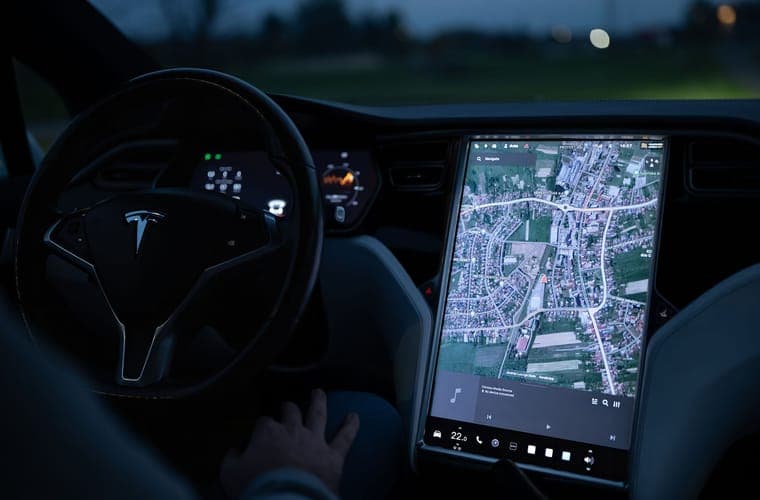 Abstract Ocean ultra-premium 9H tempered glass The premium pick. Buy it when you want the safest version of a risky modification. | Best tempered glass | 8.4 | |
| 2 | 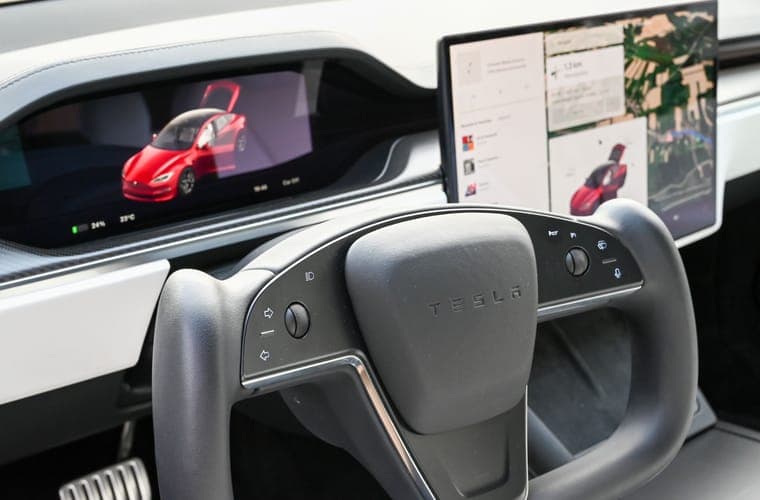 3W 15.4-inch matte tempered glass Honest about fitment, which in this category is worth more than the glass itself. | Best value tempered glass | 8.4 |
Scores are our editorial assessment of fitment scope, published materials and coverage. They are not lab measurements and we have not tested these products.
1. Best tempered glass
Abstract Ocean ultra-premium 9H tempered glass
Glass keeps the screen's own feel under a fingertip, which is the whole reason this category exists — a display you touch constantly should not feel like plastic. Thicker, more expensive, and it will shatter rather than scratch if something hits it.
Best for: Owners who want the best-regarded glass and will pay for it
Fits: Model 3 Highland (2024-2026) · Model Y Juniper (2025-2026)
What works
- A long-established Tesla specialist rather than a marketplace brand, with real support behind the part
- Offering both front and rear pieces matters on cars that have a second-row screen
What does not
- Among the most expensive protectors in this category
- Sold direct, so delivery is slower than a marketplace order
Manufacturer specifications
- 9H tempered glass in matte and clear finishes
- Front and rear screen sets available
- Cut for the refreshed 15.4-inch Model 3 display
Specifications as published by the manufacturer. We have not independently tested this product.
Reference: Abstract Ocean product page — we do not earn a commission there.
Specification sources: Abstract Ocean ultra-premium 9H tempered glass for the refreshed Model 3
2. Best value tempered glass
3W 15.4-inch matte tempered glass
The same construction argument at a lower price. Edge finishing is less precise, which on a bezel-less display is visible if you look for it.
Best for: Owners who want matte coverage for front and rear screens together
Fits: Model 3 Highland (2024-2026) · Model Y Juniper (2025-2026)
What works
- One of the few listings that names the display it does not fit — exactly the disclosure this category needs
- Front and rear pieces in one purchase
What does not
- Matte costs some sharpness, as it always does
- The explicit 2026 exclusion means you must know your trim, not just your model year
Manufacturer specifications
- Matte coating described by the manufacturer as glare-reducing while retaining HD clarity
- Covers the front 15.4-inch display and the rear screen
- Listing explicitly states it does NOT fit the 2026 Model Y Juniper 16-inch display
Specifications as published by the manufacturer. We have not independently tested this product.
Specification sources: 3W 15.4-inch tempered glass screen protector listing
Questions people actually ask
Is tempered glass better than film for a Tesla?
It feels better and resists scratches better. Film is thinner, which is more consistent with Tesla's stated concern about touch-layer interference, and it is far easier to apply cleanly on a screen this large.
Does a thicker protector really affect touch response?
Thickness is the mechanism by which any protector attenuates a capacitive sensor, and Tesla's warning describes exactly those symptoms. We have not measured it on these cars and will not claim a figure.
Can film be applied wet?
Most PET and TPU films can, which lets you float the sheet into position before squeegeeing. That is the main practical advantage at 15 inches and up.
What is 9H?
A pencil-hardness scale rating, which is the standard marketing claim on tempered glass. It describes resistance to a hardness-graded point, not resistance to a key or a ring, and essentially every product in this category claims it.
Sources
- Tesla Owner's Manual (North America PDF) — touchscreen care and screen-protector guidance
- Tesla Owner's Manual — cleaning the touchscreen
- Supershieldz 0.33mm tempered glass specification
- Does a Tesla need a screen protector?
Specifications and fitment claims on this page come from the manufacturer and retailer pages listed above. We have not tested these products and do not claim to have.
Read next
Screen Protectors
Matte vs Glossy Tesla Screen Protectors
Matte against glossy: what each finish costs you, and which to pick by display resolution and how you use the car.
Screen Protectors
Install a Tesla Screen Protector Without Bubbles
A step-by-step install method for a large protector: dust control, alignment and bubble recovery.
Screen Protectors
Model Y Screen Protectors: the 15-inch Display (2020-2024)
Protectors cut for the 15-inch legacy Model Y display, which the newer 15.4-inch parts do not fit.
Guides
Does a Screen Protector Void Your Tesla Warranty?
Exactly what Tesla's manual says about touchscreen protectors, what it means for warranty cover, and the alternatives.
Guides
Do You Need a Tesla Screen Protector?
The case for and against, separated by what you are actually worried about — scratches, glare or fingerprints.