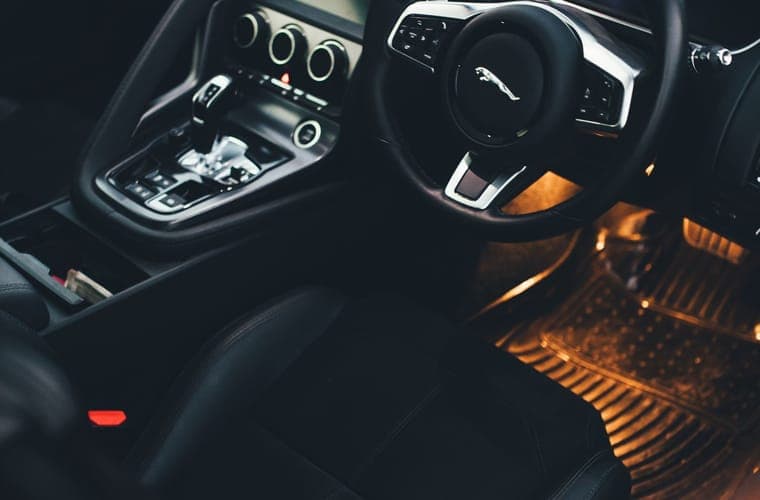
Short answer: buy TPE, and treat XPE as a layer rather than as a whole mat. TPE is a molded thermoplastic elastomer, so a TPE mat can be shaped to a footwell with real walls and hold that shape. XPE is cross-linked closed-cell polyethylene foam - light, soft, waterproof, and at its best as the core of a layered liner rather than as the liner itself. The best mats in this comparison use it exactly that way.
The confusion is not yours. Listings for both materials use the same words - all-weather, waterproof, custom fit - and the same photographs of a mat lying in a footwell. Neither acronym is a quality grade, and a cheap TPE sheet can be worse than a well-built XPE-cored liner. What follows is how to tell which one is in front of you, and what each is genuinely good at.
What the two materials actually are
XPE stands for cross-linked polyethylene. It is a closed-cell foam: a sheet of gas-filled cells that cannot absorb water, which is why it is used in packaging, camping mats and insulation. Pressed into a mat, it is light, soft underfoot, quiet and completely waterproof. Its weakness is that it is foam, so it compresses, and a thin sheet of it has no structural way to hold a raised wall at the edge of a footwell.
TPE stands for thermoplastic elastomer: a family of compounds that behave like rubber but can be melted and injection-molded. That single property is the whole argument for TPE in this category, because molding is what lets a mat follow the contour of a footwell and stand a wall up at its edge. It is heavier than foam and, in a dense formulation, considerably heavier than people expect when the box arrives.
| XPE (cross-linked foam) | TPE (molded elastomer) | |
|---|---|---|
| What it is | Closed-cell polyethylene foam sheet | Rubber-like compound that can be injection-molded |
| Can it hold a raised wall? | Not on its own - foam compresses | Yes, that is the reason to buy it |
| Weight | Light; easy to lift out and hose | Heavy, and heavier with density |
| Water | Cannot absorb it; the cells are closed | Cannot absorb it; contains it behind the wall |
| Underfoot | Soft, quiet | Firm, and audible if the surface is hard |
| Where it belongs | As a core layer inside a liner, or as a cheap flat mat | As the whole mat, molded to the generation |
| How it is usually sold | Often as a flat, approximately cut sheet | Usually per generation, per row |
How to tell which one a listing is selling
Look at the side of the mat in the photographs, not the top. A molded TPE liner photographed from the side shows a wall that stands up at the footwell edge and a shape that is clearly not flat. A foam mat photographed from the side shows an edge. If every photograph is taken from directly above, that is itself information.
- A listing that names a layer count - top surface, core, anti-skid base - is describing a layered liner, and the foam is doing the middle job. That is the construction where XPE is a feature rather than a compromise.
- A listing that names a generation and a row (first row for a 2024-2026 Highland, for example) has tooling behind it. Tooling means molding, and molding means an elastomer.
- A listing that says it fits Tesla Model 3 and Model Y with no year ranges is a sized sheet. The material matters less at that point than the fact that nobody cut it for your car.
- A listing whose photographs show the mat rolled up for shipping is showing you something that flexes like foam. Dense molded liners are shipped flat for a reason.
Quick picks
| # | Product | Best for | Score | Price |
|---|---|---|---|---|
| 1 | 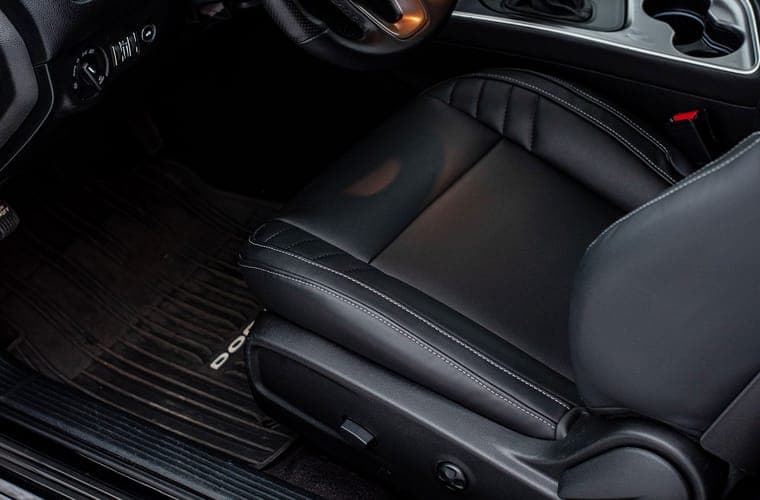 3W full-coverage TPE liner kit The most complete Juniper kit, and it earns its place on fit rather than price. | Best TPE kit | 8.8 | |
| 2 |  Tesloid TPE floor mat set A sensible middle option when the premium liners are more mat than you need. | Best value TPE | 8.2 | |
| 3 | 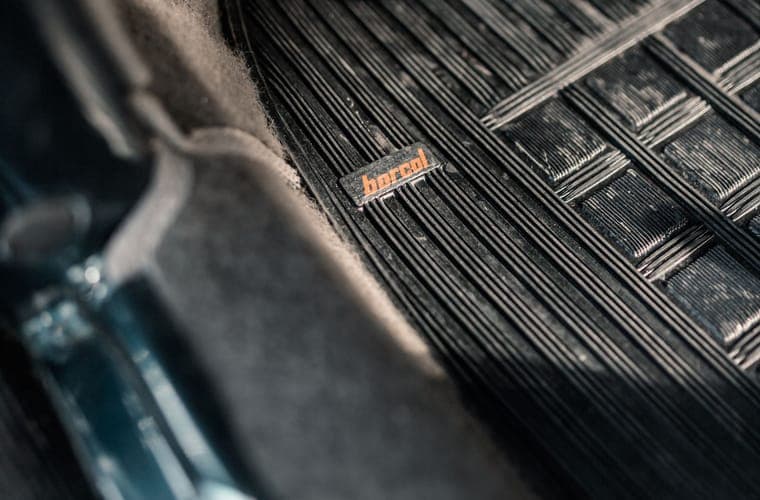 3D MAXpider KAGU all-weather floor liners The reference-fit liner for the legacy Model Y, at a reference-fit price. | Best use of an XPE core | 8.6 | |
| 4 |  WeatherTech FloorLiner Buy these if winter is the problem you are actually solving. | Best if you want neither | 8.6 |
Scores are our editorial assessment of fitment scope, published materials and coverage. They are not lab measurements and we have not tested these products.
1. Best TPE kit
3W full-coverage TPE liner kit
TPE throughout, described by the manufacturer as a higher-density compound than entry-level sets, with separate part numbers per Model Y generation and coverage that runs from the footwells through to the sub-trunk. If you have decided on TPE and you want the whole floor done in one order, this is the set. Expect real weight - that is what the density means in practice.
Best for: Juniper owners who want the densest TPE and the widest coverage
Fits: Model Y Juniper (2025-2026) · Model 3 Highland (2024-2026)
What works
- The broadest single-kit coverage we found for the Juniper, seat backs included
- Came out ahead of both MAXpider and WeatherTech on fit in one independent Juniper comparison
What does not
- A newer name than WeatherTech or MAXpider, so there is less long-run evidence of how the material ages
- Seat-back pieces are a nice extra but are not as well finished as dedicated seat-back protectors
Manufacturer specifications
- TPE throughout, described by the manufacturer as a higher-density compound than entry-level sets
- Kit covers footwells, frunk, cargo floor, sub-trunk and seat backs
- Separate part numbers per Model Y generation
Specifications as published by the manufacturer. We have not independently tested this product.
Specification sources: 3W Liners Tesla catalog, Independent Juniper floor-mat comparison (3W, 3D MAXpider, WeatherTech)
2. Best value TPE
Tesloid TPE floor mat set
TPE mats listed separately per Model 3 and Model Y generation, sold as front, rear and cargo pieces so you can buy one row at a time. Drop-in fitment, no drilling, no adhesive. The listing publishes less detail than the premium brands do, so you are buying on the generation-specific fitment rather than on a specification sheet.
Best for: Owners who want a mid-price TPE set with per-generation part numbers
Fits: Model Y (2020-2024) · Model Y Juniper (2025-2026) · Model 3 (2017-2023) · Model 3 Highland (2024-2026)
What works
- Catalog is organized by generation, which cuts the main risk in this category
- Sits between the budget sets and the premium liners on price
What does not
- Perimeter wall is shallower than WeatherTech's, so heavy slush can escape the mat
- Smaller brand means fewer independent fit reports to cross-check
Manufacturer specifications
- TPE mats listed separately per Model 3 and Model Y generation
- No-drill, drop-in fitment
- Sold as front, rear and cargo pieces
Specifications as published by the manufacturer. We have not independently tested this product.
Specification sources: Tesloid Model 3 exterior accessory catalog
3. Best use of an XPE core
3D MAXpider KAGU all-weather floor liners
This is where XPE belongs: not as the whole mat, but as the middle layer. 3D MAXpider publishes a three-layer construction - a patterned top surface, an XPE core and an anti-skid base - which uses the foam for weight and insulation while a tougher surface takes the wear. Listed for the 2020-2024 Model Y, and among the more expensive ways to cover a footwell.
Best for: The 2020-2024 Model Y owner who wants the best-fitting liner and will pay for it
Fits: Model Y (2020-2024)
What works
- The fit reputation in this category is largely built on these liners — edges follow the footwell rather than sitting on top of it
- The raised lip holds meltwater and grit instead of letting it run under the mat
- Piece-by-piece buying means you can skip the cargo liner if you already have one
What does not
- One of the most expensive ways to cover a footwell, and buying the pieces separately adds up fast
- The hard top surface is noticeably less forgiving underfoot than carpet
Manufacturer specifications
- Three-layer construction: a carbon-fiber-pattern top surface, an XPE core and an anti-skid base
- Thermoplastic rubber, laser-measured to the specific footwell
- Sold as separate first-row, second-row and cargo pieces
Specifications as published by the manufacturer. We have not independently tested this product.
Specification sources: 3D MAXpider Tesla Model Y liners (Teslarati store listing), Eight Model Y floor-mat sets compared
4. Best if you want neither
WeatherTech FloorLiner
Neither a foam nor a conventional TPE sheet: WeatherTech publishes a high-density tri-extruded material with raised channel walls, measured digitally per vehicle and model year. Worth knowing about on this page because the XPE-versus-TPE question is sometimes the wrong question - if what you want is the deepest wall and the most exact fit, this is the category that answers it.
Best for: Snow-belt owners who want the deepest tray walls available
Fits: Model Y (2020-2024) · Model Y Juniper (2025-2026) · Model 3 (2017-2023) · Model 3 Highland (2024-2026)
What works
- The tall perimeter wall is the most convincing containment in this category for slush and road salt
- A long-standing fitment database means the year you own is usually explicitly listed, not implied
What does not
- The rigid material is the least pleasant underfoot of the premium options and can creak on a cold morning
- Finish is utilitarian — nobody buys these because they look good
Manufacturer specifications
- High-density tri-extruded material with raised channel walls
- Digitally measured per vehicle and per model year
- US-manufactured; the company's own fitment lookup is by year, make and model
Specifications as published by the manufacturer. We have not independently tested this product.
Reference: WeatherTech fitment lookup — we do not earn a commission there.
Specification sources: 3D MAXpider vs WeatherTech for the Model Y Juniper, Independent Juniper floor-mat comparison (3W, 3D MAXpider, WeatherTech)
The case for a foam mat, honestly made
There is one. Foam is light, it is quiet, it is pleasant underfoot and it is the easiest thing in this category to lift out, hose and drop back. For a car that lives on dry roads and sees mostly dry shoes, a flat foam mat protects carpet from dust and grit perfectly well, and it does it at the bottom of the price range for the category.
What it cannot do is contain liquid. Melting snow and spilled drinks need somewhere to go, and the thing that gives them somewhere to go is a wall around the edge of the mat. That is also the thing foam cannot structurally provide. If you live somewhere with real winters, that single limitation decides the question - which is the same conclusion mats versus liners reaches from the other direction.
Where the premium liners sit
The expensive liners are not TPE-versus-XPE at all, which is worth knowing before you spend an evening comparing acronyms. 3D MAXpider's KAGU line publishes a three-layer build with an XPE core, so it uses foam deliberately, in the one place foam is good. WeatherTech publishes a high-density tri-extruded material and digital measurement per model year. Both are answers to the question of fit rather than the question of compound.
That is the reframe this page is really for. The material question is worth about one minute of your time; the generation question is worth five, and the coverage question - how many of the car's surfaces you are actually covering - is worth the rest. TPE, rubber or carpet handles the finished-mat version of the same decision, and 3D MAXpider versus WeatherTech handles the premium end of it.
Our call
For most Model Y and Model 3 owners: a molded TPE set, bought for your exact generation, is the right purchase, and the 3W kit is the version of that with the broadest coverage. If you are buying one row at a time or the budget is tight, the Tesloid TPE mats are listed per generation too, which is the thing that matters most.
Buy XPE when it is a layer in something better - the KAGU construction is the clearest example - rather than when it is the whole mat. And if your real priority is the deepest possible wall and the most exact possible fit, step past both acronyms and look at the tri-extruded liners instead.
Questions people actually ask
Is XPE or TPE better for Tesla floor mats?
TPE, for most owners. It can be injection-molded, so a TPE mat can follow the footwell and hold a raised wall that contains water. XPE is a closed-cell foam that compresses, so on its own it cannot hold that wall - it works best as the core layer inside a layered liner.
What does XPE stand for?
Cross-linked polyethylene: a closed-cell foam whose cells are sealed, so it cannot absorb water. It is the same family of material used in camping mats and packaging foam, which is why an XPE car mat is noticeably light and soft underfoot.
Are XPE floor mats waterproof?
The material is - closed-cell foam cannot soak up water. Being waterproof is not the same as containing water, though. Without a molded wall at the footwell edge, liquid runs off the mat rather than staying on it.
Why are TPE mats so heavy?
Because density is the point. A denser compound holds its molded shape, resists being deformed by a heel and stands a wall up at the edge. The weight is a side effect of the property you are buying.
Do premium liners use XPE?
Some do, as a layer. 3D MAXpider publishes a three-layer KAGU construction with a patterned top surface, an XPE core and an anti-skid base. That is foam used where foam is good, under a surface built to take the wear.
Sources
- 3W Liners Tesla TPE liner catalog
- 3D MAXpider Tesla Model Y liners and cargo liners (Teslarati store listing)
Specifications and fitment claims on this page come from the manufacturer and retailer pages listed above. We have not tested these products and do not claim to have.
Read next
Floor Mats & Liners
TPE vs Rubber vs Carpet: Tesla Floor Mat Materials
The material comparison that decides how a mat ages: TPE, rubber and carpet, with a committed recommendation.
Floor Mats & Liners
Floor Mats vs Floor Liners for a Tesla
The flat mat against the moulded tray: how each one fails, which suits your climate, and why the listing title will not tell you which you are buying.
Floor Mats & Liners
3D MAXpider vs WeatherTech for the Model Y and Model 3
The premium liner head-to-head: containment versus comfort, and a committed recommendation rather than a draw.
Floor Mats & Liners
Best Floor Mats for the Model 3 Highland (2024-2026)
Mat sets listed for the 2024-2026 Model 3 Highland footwell, which differs from the pre-Highland car.
Floor Mats & Liners
Best All-Weather Floor Mats for the Model Y and Model 3
All-weather liners across both cars, ranked on how much water they actually keep off the carpet.
Guides
Are All-Weather Floor Mats Worth It?
An honest cost-benefit on all-weather mats for a Model Y or Model 3: who should buy, who should not, and what you give up.